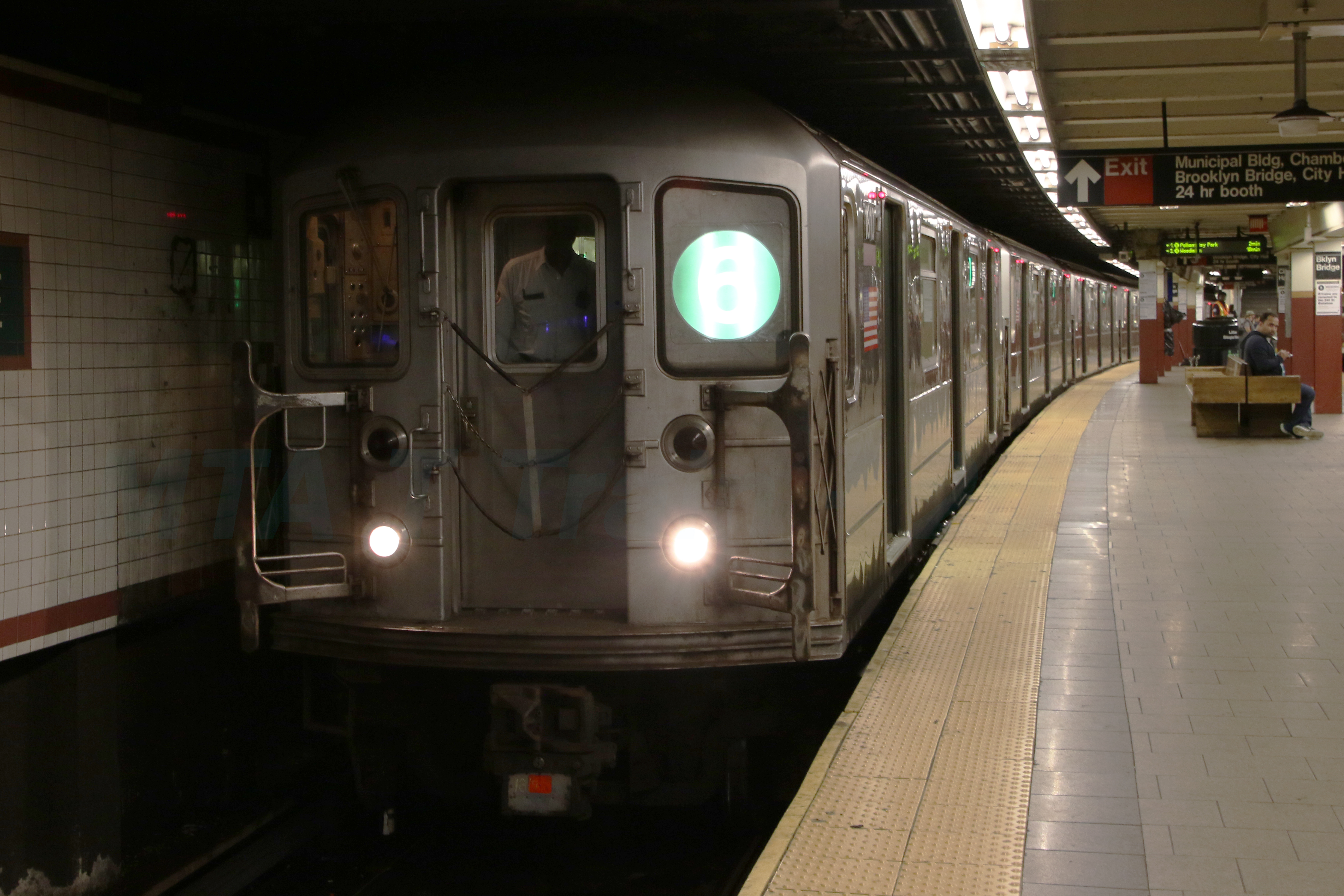
The Lexington Avenue local's weekday terminal OTP fell 4.4 points from March to May, backed by MTA data — but equipment failures aren't the top delay driver. Police and medical calls are.
Riders on the 6 train have been logging daily disruptions — door malfunctions, mechanical holds that string out headways — and the MTA's performance data backs the frustration. The Lexington Avenue local's weekday terminal on-time performance fell to 72.8 percent in May 2026, according to the agency's open data, a drop of 4.4 percentage points from March's 77.2 percent and the line's worst showing in the three months of currently published figures.
What makes the slide harder to attribute to a single cause is that the number of delay-causing incidents on the 6 actually declined from April to May. Infrastructure and equipment incidents — the MTA's category covering mechanical failures, door malfunctions, and track and signal problems — fell from 114 weekday incidents in April to 77 in May. April's weekday on-time rate was 77.4 percent. May's was 72.8.
The biggest source of weekday delays on the line in May was not equipment at all: it was Police & Medical calls, at 133 incidents, followed by Operating Conditions at 79, Infrastructure & Equipment at 77, and Planned Right-of-Way Work at 49. The structure was similar in April — Police & Medical led at 147 — but equipment incidents ran roughly a third higher that month.
The 6 operates R62A cars built by Bombardier Transportation in the mid-1980s, among the older rolling stock in regular New York City Transit service. The line runs local from Pelham Bay Park in the Bronx to Brooklyn Bridge–City Hall in lower Manhattan, sharing the Lexington Avenue trunk with the 4 and 5 express trains.
Across 11,040 scheduled weekday trips in May, a 72.8 percent on-time rate translates to roughly 3,000 trains arriving late at terminal. New York City Transit, the MTA agency that operates the subway, has not issued a public advisory specific to the line's recent performance drop. The data, published through May on the state's open-data portal, is the most current available.