A T-rex skeleton excavated on a South Dakota ranch sold Tuesday at Sotheby's Breuer building on Madison Avenue for $50.1 million — the most any dinosaur fossil has fetched at auction — to an unidentified phone bidder. Paleontologists say the private sale removes the specimen from scientific reach.
A fossilized Tyrannosaurus rex nicknamed Gus sold Tuesday for $50.1 million at Sotheby's Breuer building on Madison Avenue — the most any dinosaur fossil has fetched at auction — to a phone bidder whose identity Sotheby's has not disclosed.
The sale, reported by The Guardian, cleared the pre-sale estimate of $20 million to $30 million by more than $20 million and surpassed the previous record of $44.6 million, set in 2024 when Sotheby's sold a stegosaurus named Apex at the same venue.
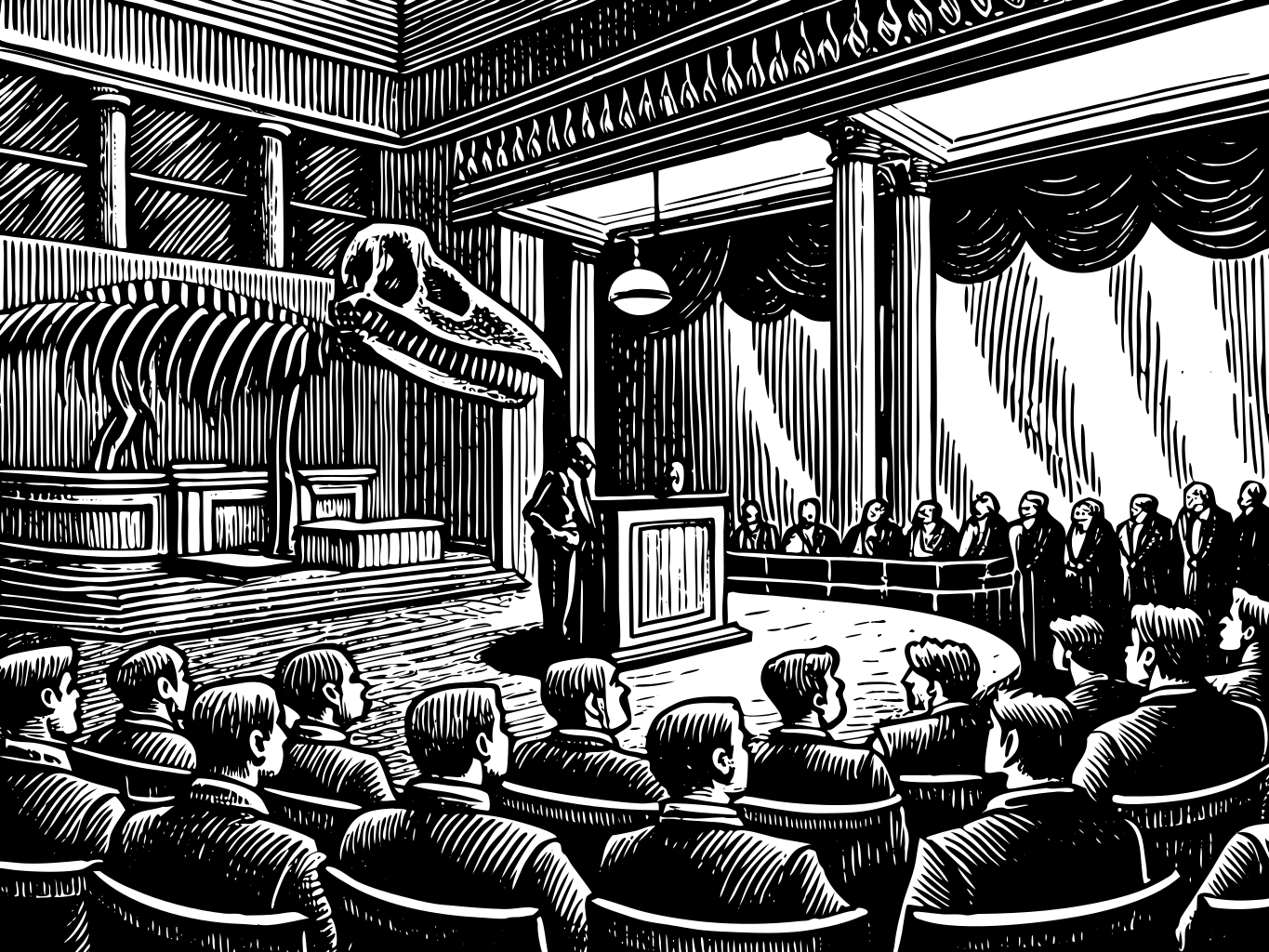
Gus — named for Gary "Gus" Licking, the Harding County, South Dakota, rancher on whose land the skeleton was discovered — was excavated between 2021 and 2023 by Theropoda Expeditions, a commercial fossil outfit. The skeleton stands 3.8 meters tall and stretches approximately 38 feet; Sotheby's catalogued 183 fossil bone elements, roughly 61 percent complete by bone count, and described it as "one of the largest T rex ever found." The specimen's real skull, too large and heavy to mount on the skeleton itself, sat in the Breuer lobby during the exhibition run; a reproduction head is fitted on the mounted body.
Cassandra Hatton, Sotheby's vice-chair and global head of science and natural history, said in a statement that "the market responds when great specimens are taken care of in the right way."
Scientists were less sanguine. Professor Richard Butler of the University of Birmingham told The Guardian that "a fossil not in a recognised museum collection cannot be studied and is therefore lost to research." Professor Stephen Brusatte of the University of Edinburgh called the pattern "very concerning," while acknowledging the sale is legal under U.S. law, which permits private landowners to sell what is found on their property.
Sotheby's Breuer — the former Whitney Museum building on the Upper East Side's gallery corridor — has now hosted back-to-back dinosaur auction records. For the paleontological community, the pattern is the headline: specimens of this scale are no longer priced within reach of the institutions built to hold them.
