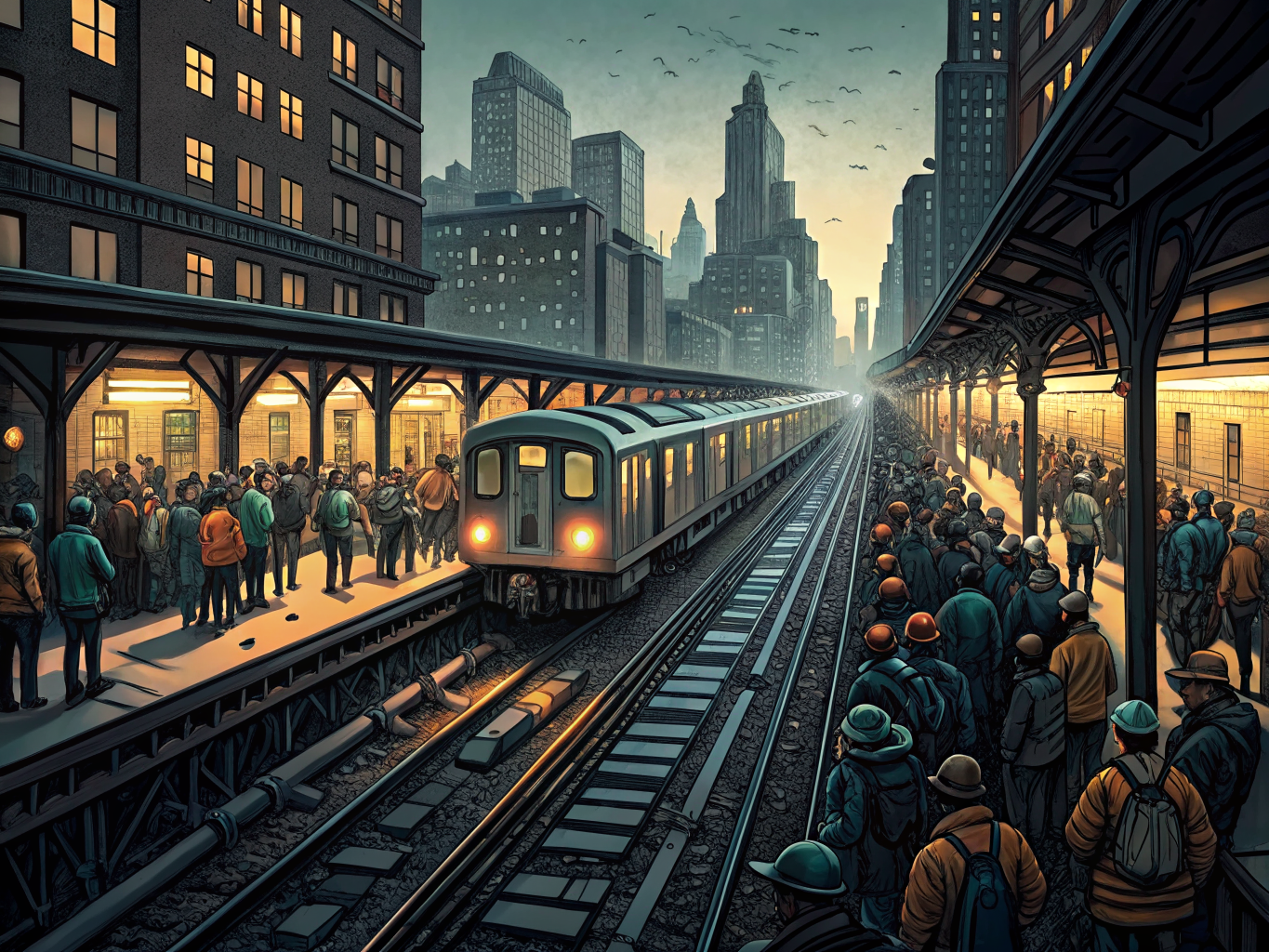
NYC Transit pulled back service on the 1, 2, and 3 trains starting July 24 to replace aging track switches on the IRT Seventh Avenue Line — a corridor that still lacks CBTC and depends on weekend shutdowns to keep its century-old infrastructure upright.
Riders on the IRT Broadway–Seventh Avenue corridor hit a thinned schedule this weekend as MTA NYC Transit scaled back 1, 2, and 3 train service to replace aging track switches — work the agency posted in advance as part of its planned-work program, but that still left some riders scanning platforms and asking what happened.
The MTA flagged the July 24–27 weekend changes for the 1, 2, and 3 as among its most impactful of the period, alongside separate service changes on the LIRR near Elmont–UBS Arena and Metro-North's Hudson Line. The reason for the Seventh Avenue work: switches on the corridor that have degraded to the point where they can't wait for the next capital-cycle replacement. Switch failures are one of the more common triggers for IRT delays; swapping them during lower-ridership windows is the agency's standard approach, but the breadth of the cutback — multiple trains, multiple segments — reflects how invasive the job is when it's done right.
The MTA did not specify in public-facing materials exactly which switches are being pulled or the precise segment most affected. Riders on the 1, 2, and 3 should check the MTA app or website for their specific station; the agency typically operates shuttle buses to cover suspended sections.
The underlying condition is structural. The IRT Seventh Avenue Line has not yet received Communications-Based Train Control (CBTC) signal modernization — that project remains in the MTA's capital program — which means the corridor still relies on legacy switch hardware installed in some places during the pre-WWII build-out of the system. Until CBTC arrives and brings modern train management with it, weekend shutdowns for switch-by-switch repair are how NYC Transit keeps the line from a worse outcome on a Tuesday morning.
